In Nassau County, history hides in plain sight. Behind manicured hedges and beach-town storefronts are spy letters, abolition-era lore, Gilded Age power plays, aviation firsts, and a moonshot built in a Bethpage factory.
Here’s a “hidden history” tour that hits your list, plus a few lesser-known angles to help each stop feel like a true discovery.
1. Raynham Hall Museum (Oyster Bay): Where a family home became a spy headquarters
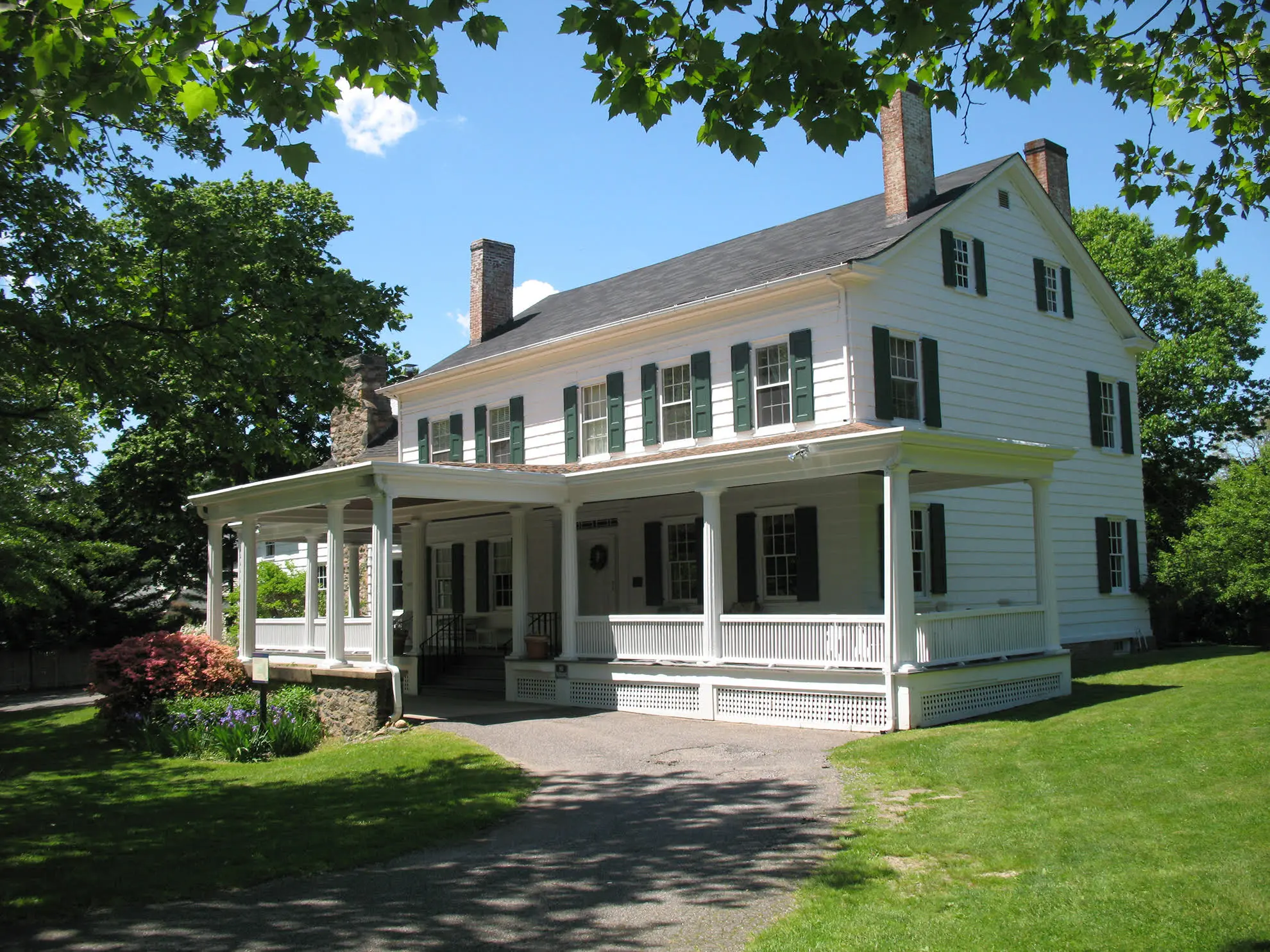
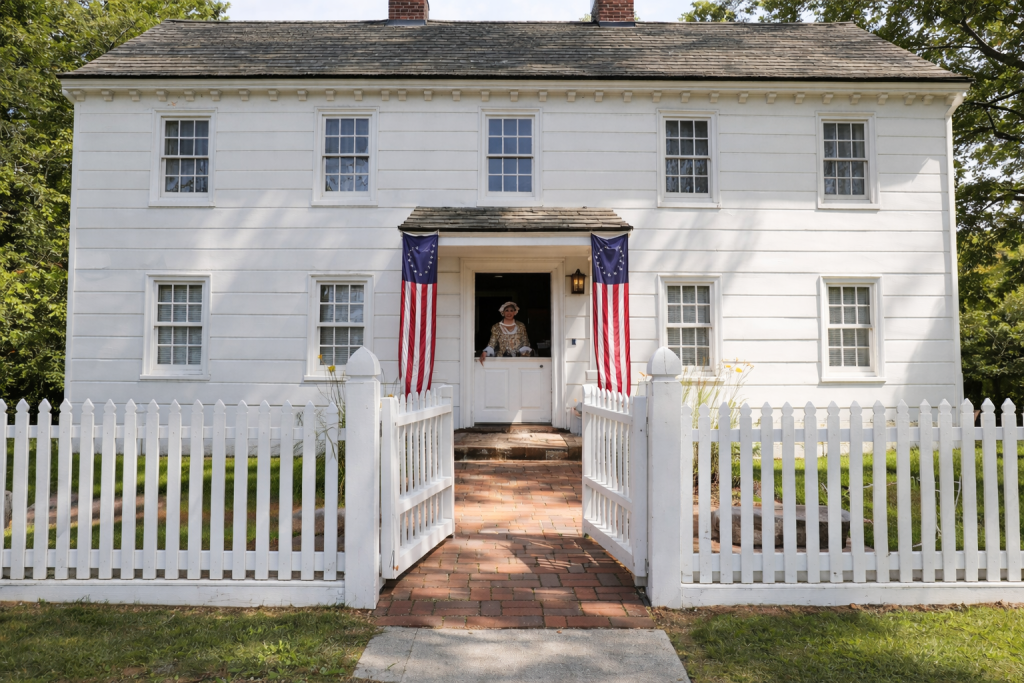
Raynham Hall isn’t just a preserved colonial house frozen in time. It’s a living crossroads of ordinary family life and extraordinary national drama. Built in 1738 and home to the influential Townsend family, the house witnessed both the familiar rhythms of domestic life and the secret workings of America’s earliest intelligence network.
At the height of the American Revolution, Oyster Bay and Long Island were under British control, creating a dangerous environment for Patriots. Despite this, Robert Townsend, a member of the Townsend family, became one of the most important operatives in the Culper Spy Ring, the clandestine network that supplied General George Washington with critical intelligence about British troop movements, plans, and fortifications.
What makes Raynham Hall especially compelling isn’t just the spy story itself, but the juxtaposition of public and private life under occupation:
- British officers were quartered in the very house where the Townsends lived, including Lieutenant Colonel John Graves Simcoe and his Queen’s Rangers. The family was forced to share meals and daily routines with the occupying force, all while secret messages were being composed and transmitted.
- Robert Townsend sent coded letters under the alias “Samuel Culper, Jr.”, operating from this base to gather and relay intelligence without arousing suspicion, thanks in part to his cover as a merchant and journalist.
- The museum today displays original correspondence and artifacts that bring these quiet acts of courage to light, reminding visitors that espionage wasn’t just about cloak-and-dagger theatrics. It was rooted in everyday spaces like family studies and kitchens.
Raynham Hall also illuminates the human side of espionage: coded messages were written in rooms where children once played; locked drawers that once held trade accounts may have sheltered secret letters; and the creaks of the floorboards would have carried both footfalls of officers and whispered plans of rebellion. This makes the house not just a relic, but a stage where ordinary family life and the fate of a nation intersected.
In recent years, the museum has incorporated augmented reality exhibits and immersive tours that deepen the sense of walking through history, placing you in the shoes of the Townsends and the spies who used their home as an unlikely headquarters.
2. Sagamore Hill (Oyster Bay): Where a President’s home became a working seat of power
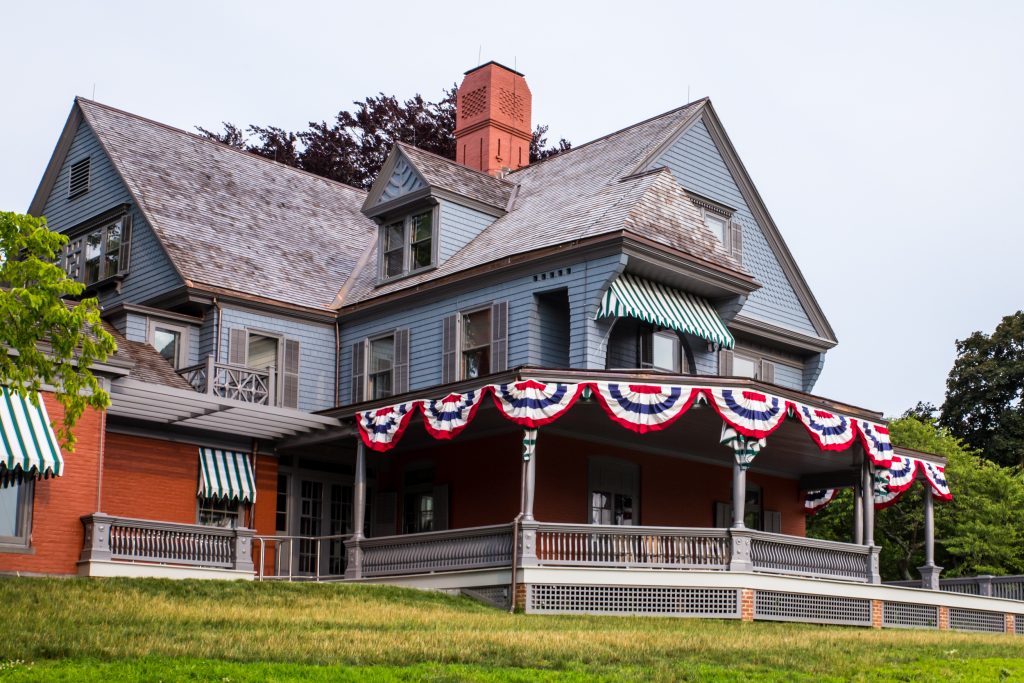
Most visitors arrive at Sagamore Hill expecting the “President’s House” story – a beautifully preserved residence where Theodore Roosevelt lived, entertained, and raised his family. But Sagamore Hill isn’t just a historic home frozen in time. It’s a living crossroads of private life and public power, where domestic rhythms and national decisions existed side by side.
Completed in 1885, Sagamore Hill was more than Roosevelt’s retreat. It functioned as a working hub of political life, where correspondence flowed daily, advisers were received, and policies were shaped in real time.
At the height of Roosevelt’s presidency, Sagamore Hill was known as the “Summer White House.” Cabinet members, foreign dignitaries, journalists, reformers, and industrial leaders made the journey to Cove Neck. Telegrams and dispatches arrived constantly. Decisions affecting conservation, labor reform, trust-busting, and foreign policy were refined here, not Washington.
But what makes Sagamore Hill especially compelling isn’t just that a president lived here. Instead, it’s the juxtaposition of national leadership and deeply personal formation.
Roosevelt’s worldview wasn’t crafted solely in political chambers. It was shaped by the landscape around him, from the woods and shoreline to the open sky. Here, he rode horseback, hiked trails, studied birds, swam in the Sound, and wrote extensively. His belief in conservation, national vigor, and the “strenuous life” was lived daily on this property.
Inside the house, family life was energetic and informal. Children ran through halls where foreign policy letters were drafted. Personal libraries held the books that influenced Roosevelt’s thinking on history, empire, morality, and citizenship. The porch where he greeted guests was also a vantage point for contemplation, where private reflection and public duty intersected.
Today, preserved by the National Park Service, Sagamore Hill allows visitors to walk through rooms where global influence and ordinary life overlapped. The furniture, photographs, books, and artifacts reveal both how a president lived and how a worldview was formed.
3. St. George’s Episcopal Churchyard (Hempstead): A graveyard that reads like a local founding document
St. George’s Episcopal Church has been part of Hempstead since the early 1700s. The current buildings reflect later periods, but the real sense of age is in the churchyard. Walk through it slowly and you begin to understand just how long this town has been here.
The headstones trace Hempstead’s evolution in a way no plaque or museum panel can. You’ll see surnames that still appear on local street signs. You’ll find markers for Revolutionary War soldiers, Civil War veterans, and residents whose lives spanned the colonial period through early American independence. The stones shift in style over time, from simple, weathered colonial carvings to more ornate 19th-century monuments, marking changes in wealth, taste, and identity.
What makes this place feel hidden isn’t that it’s secret. It’s that most people pass by without realizing they’re standing inside one of Nassau County’s oldest continuous community spaces.
Overall, this churchyard shows how a town grows: families expanding, generations overlapping, conflicts reaching even a small Long Island settlement. During the Revolutionary War, Hempstead was politically divided and under British control. Some of the people buried here would have lived through that tension firsthand, navigating loyalty, survival, and shifting allegiances. A visit to this space shows a town’s continuity and evolution – who settled here, who stayed, who served, and who built Long Island.
4. Rock Hall (Lawrence): An 18th-century house with Revolutionary-era echoes
At first glance, Rock Hall looks like the kind of elegant, carefully-preserved 18th-century home you’d expect on the South Shore. But inside, it’s fully furnished as a period house museum, giving visitors a glimpse into colonial life on Long Island – and despite its epic presence, it tells a story of historic turmoil and revolution.
During the Revolutionary War, Long Island was under British control for most of the conflict. Large, well-built homes were often requisitioned, occupied, or otherwise disrupted by military presence. Even when not formally seized, daily life was shaped by instability, from shifting allegiances and supply shortages to uncertainty about who held power and for how long.
Rock Hall reminds us that the Revolution didn’t only unfold in dramatic clashes or famous speeches. It unfolded in homes where families had to adjust to new rules almost overnight. The same kinds of spaces that once hosted formal dinners or business discussions could just as easily have been subject to surveillance, quartering, or sudden interruption.
Walking through Rock Hall today, you see polished wood floors, period furnishings, and decorative details that suggest stability and order. The hidden story is that homes like this were anything but insulated. They were part of a region caught in the middle, economically tied to British trade, geographically strategic, and politically divided.
As you explore Rock Hall, keep in mind this home doesn’t tell a single heroic narrative. Instead, it captures what it meant to maintain a household, protect property, and navigate uncertainty during a time when control of the island shifted and loyalties were complicated.
5. Cedarmere (Roslyn Harbor): A poet’s estate with centuries-old roots
Cedarmere is the storied home of William Cullen Bryant – a local poet, newspaper editor, and one of the most influential cultural voices of the 19th century. Visitors come expecting literary history, and they find it. Bryant lived and worked here for decades, shaping public opinion through both poetry and journalism. But the property’s story begins earlier than Bryant.
Part of the house dates to the late 1700s, grounding Cedarmere in the colonial era long before it became a literary retreat. That earlier structure connects the estate to Roslyn’s working waterfront and milling history, when this stretch of the North Shore was less country estates and more commerce and local industry.
When Bryant purchased the property in 1843, he transformed it. He expanded the house, reshaped the landscape, planted trees, and turned the grounds into a carefully designed natural refuge. But this wasn’t simply aesthetic improvement. Bryant was a leading voice in the early conservation movement and an advocate for public green space, including what would become Central Park. Cedarmere became an extension of those beliefs, serving as a lived experiment in how landscape and civic responsibility intersect.
As you tour the property, think about this massive influence that once emerged from these halls – here, media influence, environmental thought, and American identity overlapped. Bryant edited the New York Evening Post from here. He wrote about politics, abolition, and expansion while entertaining thinkers and reformers.
Walk the property today and you see a peaceful estate framed by trees and water. What’s less visible is how much national conversation flowed out of this space. The house connects colonial Long Island, 19th-century journalism, early conservation philosophy, and the intellectual shaping of a young nation.
| READ MORE…
Live Like Teddy Roosevelt in Nassau County |
6. Roosevelt Field (Garden City/Uniondale area): The ground that helped invent modern air travel
When you think about Roosevelt Field, you likely think about the massive mall and entertainment destination. But long before it was one of the premier shopping destinations in Nassau County, this stretch of the Hempstead Plains was one of the most important aviation grounds in the country.
In the early 20th century, the wide, flat openness of central Nassau County made it ideal for flight. During World War I, the area was used as a military aviation training field. Pilots trained here when powered flight was still new, experimental, and dangerous. Aircraft were fragile. Runways were little more than cleared land. The idea of crossing an ocean by plane still felt improbable.
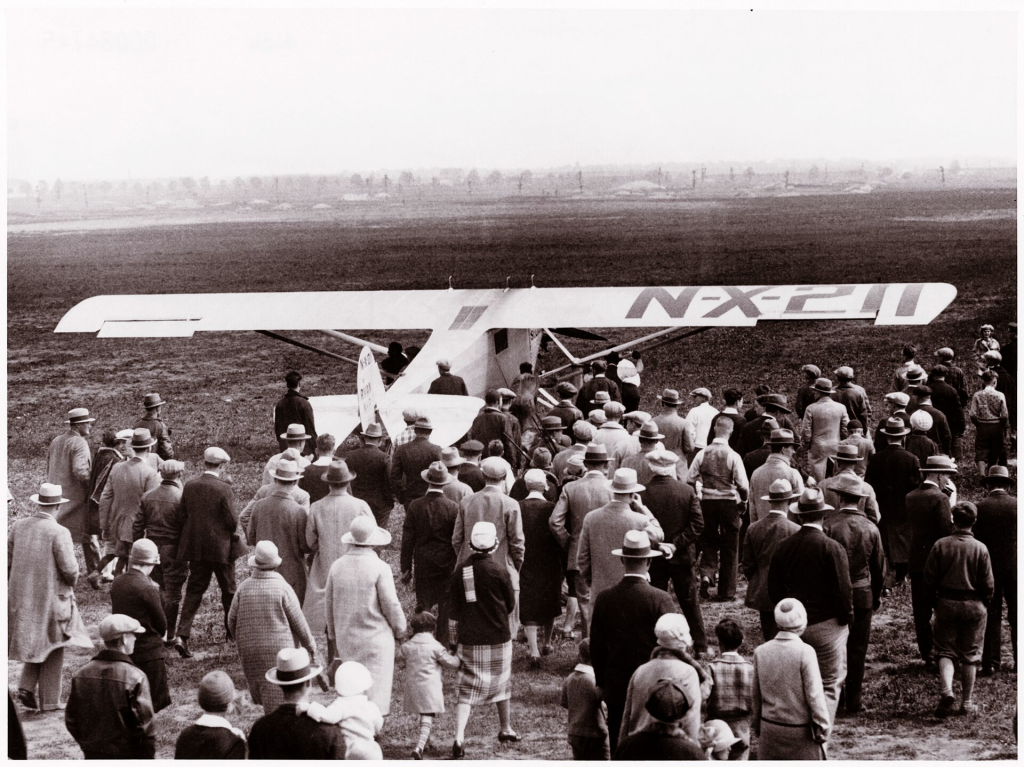
But Roosevelt Field’s most extraordinary contribution to aviation history happened in 1927, when Charles Lindbergh took off from this site, in the Spirit of St. Louis on the first nonstop solo flight across the Atlantic. When he lifted off from Roosevelt Field, the famed pilot catapulted aviation into a new era, and the field became part of global history overnight.
7. The Grumman Site (Bethpage): Nassau helped build the moon landing
If you’re looking for a true “wait, that happened here?” moment in Nassau County history, this is it. The Lunar Module that carried astronauts from orbit down to the surface of the moon during the Apollo missions was built in Bethpage by Grumman Aircraft Engineering Corporation.
In the 1960s, thousands of engineers, technicians, craftsmen, and factory workers in central Nassau County worked on one of the most complex machines ever designed. The Lunar Module wasn’t sleek like the Command Module. It wasn’t built to re-enter Earth’s atmosphere. It was built for one purpose only: to land on the moon and lift off again. It looked fragile and almost skeletal. But it worked.
When Neil Armstrong and Buzz Aldrin descended to the lunar surface in 1969 aboard Apollo 11’s Lunar Module Eagle, the final approach was guided by technology, calculations, and craftsmanship that originated inside Long Island industrial buildings.
The hidden history here, then, is twofold. First, most people associate the space race with Cape Canaveral or Mission Control in Houston. But the quiet, highly technical work of designing and building the Lunar Module happened in Bethpage. It was factory floors and drafting tables, not launchpads, that made the moon landing possible.
Second, this wasn’t an isolated achievement. Nassau County was part of a larger aviation corridor that included, again, Roosevelt Field and other aerospace innovators. The region evolved from early flight experimentation to Cold War aerospace engineering in just a few decades.
Today, much of the original Grumman complex is gone or repurposed. You won’t see a rocket on the skyline and there’s no dramatic monument announcing that moon-bound spacecraft were engineered here. But they were – and the Lunar Module that made “one small step” possible began its life in Nassau County.
8. Sands Point Preserve (Sands Point): Gold Coast grandeur, rewritten for the public
Sands Point Preserve was once one of the grandest private estates on the North Shore, home to members of the Gould and Guggenheim families during the height of the Gold Coast era.
In the early 1900s, Hempstead House rose first. This sprawling Tudor-style mansion was designed to project permanence and power. Castle Gould followed – an imposing stone structure inspired by European castles, originally intended as the main residence before plans shifted. Together, they reflected the ambition and wealth of the era’s industrial elite.
This was the North Shore at its most opulent, when railroads and finance fortunes were reshaping Long Island into a landscape of private estates modeled after English country houses. But Sands Point didn’t remain frozen at that moment in time. Over the years and decades, the estate changed hands and purposes. The era of private Gold Coast living faded. The property was eventually acquired by Nassau County and transformed into a public preserve, opening land once reserved for a single family to everyone.
Walk the grounds today and you see families biking, photographers capturing castle facades, and kids exploring turn-of-the-century gardens. What you don’t immediately see is how exclusive this landscape once was – how carefully controlled and how symbolic of truly elite status.
9. Old Westbury Gardens (Old Westbury): A “British country house” built for Long Island aristocracy
Old Westbury Gardens began as the estate of John S. Phipps, completed in 1906 at the height of the Gold Coast era. Today, it’s preserved as a museum home surrounded by formal gardens, open to the public. But this isn’t simply a beautiful mansion with manicured grounds. It was built to make a serious statement.
The house was modeled after an English country manor, reflecting how America’s industrial wealth was redefining status at the turn of the 20th century. Families like the Phippses weren’t European aristocracy, but architecture allowed them to project lineage, permanence, and cultural refinement. Every façade, garden axis, and interior detail reinforced that image.

For the Phippses, entertaining here meant hosting diplomats, financiers, and society figures in rooms designed to impress. The sweeping lawns and symmetrical gardens were each carefully orchestrated displays of order, control, and cultivated taste. The estate itself was designed to evoke centuries-old European heritage, but built from American steel and supported by wealth generated from railroad and finance scions. It represents a moment when Long Island’s North Shore became a canvas for newly amassed wealth to craft its own version of nobility.
Over time, like many Gold Coast estates, its role shifted. The private world it once indulged gradually gave way to preservation and public access. The once-exclusive property became – and remains – a shared cultural landmark.
Walk through the house today and you see period furnishings and elegant interiors, with stunning gardens and ponds. But beneath that beauty is a deeper story about ambition, identity, and how early 20th-century America used architecture to define its place in the world. This is the ultimate symbol of an era when Nassau County became America’s answer to the European estate tradition but, in this case, built from industrial power, not inherited titles.
10. Stepping Stones Lighthouse (Kings Point): A landmark that illuminated the way
Stepping Stones Lighthouse was built in the late 1800s to mark a dangerous reef in Long Island Sound. Set on iron pilings above the water, the red-brick lighthouse has guided ships safely past the shoals for more than a century.
Unlike grand estates or preserved house museums, you can’t simply walk up and tour it. It’s not generally open to the public, but you can see it from several North Shore beaches or from a boat on the Long Island Sound.
Its history, though, is truly unique. Before automation, lighthouse keepers stationed there endured isolation, storms, and the constant responsibility of maintaining the light. Supplies had to be delivered by boat, and bad weather could cut them off completely. The structure wasn’t comfortable, but it was functional, and it kept commerce and travel moving between New York and New England.
While Stepping Stones Lighthouse doesn’t have the same dramatic wartime history or opulent Gilded Age roots like other sites, it does represent the working history of Long Island Sound, including shipping routes, trade, fishing, and maritime growth long before GPS made navigation simple and modern.
11. Roslyn Grist Mill (Roslyn): Industry, community – and a stop on the Underground Railroad
The Roslyn Grist Mill is one of the few surviving early American industrial buildings in Nassau County. Built before the mid-18th century along Hempstead Harbor, it once harnessed tidal power to grind grain, part of the working backbone of colonial Long Island.
Long before the North Shore became associated with Gold Coast estates, this was a place of labor and commerce. Farmers brought grain, millers kept machinery running, and the nearby harbor connected the local economy to wider trade networks. The structure that still stands today is a reminder that Roslyn’s history began as a leader in critical industry.
Now undergoing restoration as a museum and education site, the mill represents a rare physical link to that early economic life. But the grist mill also carries a more complex and carefully told story.
Local research and community accounts suggest that the mill may have been connected to Underground Railroad activity. Unlike well-documented battle sites or estate records, Underground Railroad history often survives in oral tradition, local memory, and other evidence but, ultimately, many routes were deliberately undocumented. But given the mill’s discreet waterfront location and proximity to anti-slavery networks, it seems there’s a likely connection – and reminds us that history is not always cleanly archived.
Walk past the mill today and you see a picturesque structure along the water. What you’re really looking at is centuries of economic life – and a site that may also have played a quiet role in the movement toward freedom.
Explore more Nassau County 250 events, stories, and happenings.